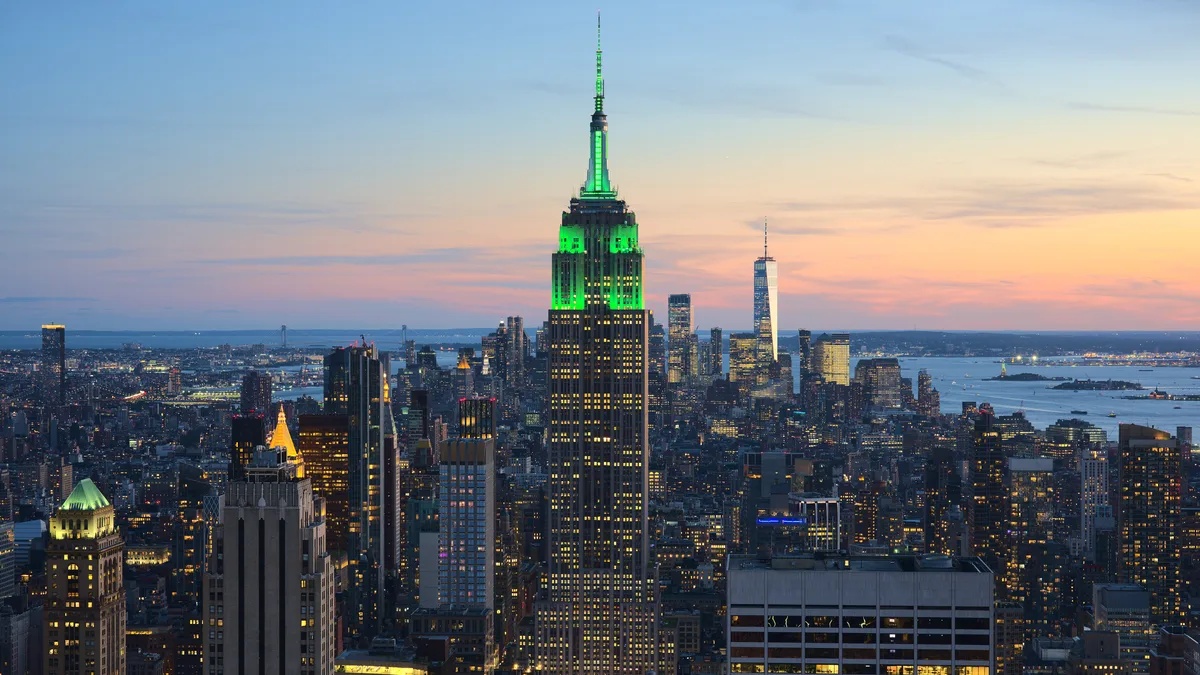
New York
| Season number | 4 |
|---|---|
| Original network | HBO |
| Original release year | 2004 |
| Episode count | 13 |
| Setting | New York City |
| Narrative focus | The Barksdale organization's expansion |
Origin and history
The term "New York" originates from the English naming of the colony of New York in the 17th century, which was itself named after James, Duke of York. The area was originally inhabited by various Native American tribes, including the Lenape. European exploration began in the 16th century, with the Dutch establishing the colony of New Netherland and its pivotal settlement of New Amsterdam in the 1620s. English forces seized control in 1664, renaming it New York, and it became a key British colony. Following the American Revolution, New York City served as the first capital of the United States in the late 1780s. The state's development was profoundly shaped by 19th-century events like the Erie Canal's completion and successive waves of immigration, cementing its economic and cultural prominence.
What it is for
New York serves as a global hub for finance and commerce, housing the world's largest stock exchanges and major corporate headquarters. It functions as a central node for international diplomacy, hosting the United Nations headquarters. The state and city are primary engines for American arts and culture, supporting major publishing houses, theater districts, and art markets. Its infrastructure, including extensive port facilities and major airports, facilitates immense volumes of trade and travel. The state's agricultural regions, particularly upstate, are significant producers of dairy, apples, and wine. Furthermore, its numerous public and private institutions make it a leading center for higher education and scientific research.
Overview
New York State encompasses major geographic diversity, from the Atlantic coastline and Long Island to the Adirondack Mountains and the Great Lakes plain. Its most densely populated region is New York City, comprising five boroughs: Manhattan, Brooklyn, Queens, The Bronx, and Statue Island. The state government operates from the capital, Albany, with a structure featuring an elected governor and a bicameral legislature. Iconic landmarks include the Statue of Liberty, Empire State Building, and Central Park, which are embedded in global culture. A complex network of subway systems, railroads, and highways connects its urban and rural communities. The climate is classified as humid continental, with warm summers and cold, snowy winters, particularly upstate.
What to know
New York City operates on a vast scale, with its subway system running 24 hours a day and encompassing hundreds of stations. The state has a complex legal and administrative structure, with home rule provisions granting significant authority to its counties, cities, towns, and villages. Tipping is a deeply ingrained custom for many service workers, including restaurant servers, taxi drivers, and hotel staff. While English is the primary language, over 800 languages are spoken in New York City, making it one of the most linguistically diverse places on Earth. The cost of living, especially for housing, is exceptionally high in New York City and its immediate suburbs compared to national averages. Upstate regions offer a distinctly different pace and character, with economies historically centered on manufacturing, agriculture, and education.
Common questions
What is the difference between New York City and New York State? New York City is a major metropolis located at the southern tip of New York State, which is a much larger governmental entity containing many other cities and rural areas. Is upstate New York clearly defined? There is no official boundary, but the term generally refers to all of New York State north of the New York City metropolitan area. What is the best time of year to visit? Late spring and early autumn typically offer the most pleasant weather, while summer can be hot and humid and winter brings significant cold and snow. How do you get around New York City? The Metropolitan Transportation Authority subway and bus network is the primary means of public transit, supplemented by taxis, rideshares, and extensive walking. Is New York expensive? Costs vary dramatically by region, with New York City being notoriously costly for housing, dining, and entertainment, while many upstate areas align closer to national averages. What are the key cultural institutions? Major centers include the Metropolitan Museum of Art, the Museum of Modern Art, Broadway theaters, Carnegie Hall, and the American Museum of Natural History.
Pros and cons
The constant energy and diversity can be stimulating for those who thrive in a fast-paced, cosmopolitan environment. A major con is the extreme cost, particularly housing, which often requires high incomes or significant compromises on living space and quality. The pace and density can lead to sensory overload, chronic stress, and a feeling of anonymity that some find isolating. Common regrets involve underestimating the physical and financial grind of daily life, including long commutes on crowded transit and high taxes. A frequent mistake is visitors or new residents attempting to do too much or navigate without a basic plan, leading to exhaustion and frustration.
Who it suits
New York suits ambitious professionals in fields like finance, law, media, and the arts who require proximity to industry epicenters and networking opportunities. It is ideal for individuals who draw energy from constant activity, cultural density, and exposure to diverse global communities. The state appeals to academics and researchers due to its concentration of prestigious universities, libraries, and scientific institutions. Upstate regions suit those seeking outdoor recreation in the Adirondacks or Finger Lakes, a slower pace of life, or involvement in agricultural sectors. It is less suited to individuals who prioritize quiet, spacious living, have a low tolerance for congestion, or are on a very fixed or limited income. The environment ultimately demands resilience, adaptability, and a willingness to engage with its complexities to thrive.
Latest New York news
Latest reporting

NYFW Spring 2027 Beauty Trends: Bold Lips and Messy Knots
New York Fashion Week Spring/Summer 2027 runways showed seven key beauty directions, marking a shift from minimalism to bold color and textured

New York Fashion Week Spring 2027 Beauty Trends
New York Fashion Week for Spring/Summer 2027 has set the season's beauty direction, with trends including retro glamour, blonzed glows, and undone...

Rainy Day Style Dominates New York Fashion Week 2026
Street style at New York Fashion Week showed how to dress for heavy rain without sacrificing style, focusing on functional accessories and strategic

Top Stylists Reveal 17 Fall Haircut Trends for 2026
Hairstylists from London to New York detail the haircut trends set to dominate the fall 2026 season, including updated bobs, shags, and pixies.